
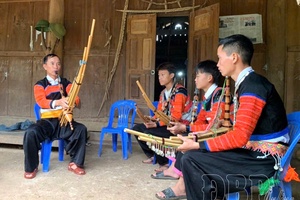
In Huổi Lanh village, Mường Toong commune, as sunlight spreads across mountain slopes, the hearth in the home of artisan Giàng A Cu glows warmly again. He lovingly cradles the panpipe and flute mellowed by time, then plays a melody calling his friends. The sound, now deep and warm, now melodious and soaring, harmonizes with the mountains and forests.
For the Hmông people in Mường Toong border commune, panpipe dancing, umbrella dancing, and the sounds of panpipes and flutes are not only art forms, but also memories, heartfelt voices, and an inherited legacy. Yet, amid the pace of modern life, these values have at times faced the risk of fading away.
Sitting on his porch watching the afternoon sunlight fade, artisan Giàng A Cu shared: “The sound of the panpipe, the dances, and the songs were left by our ancestors; they are the soul of our Hmông people. Previously, seeing the youngsters fond of watching phones and listening to new music, with few learning the panpipe or singing, I felt very sad. The panpipes just hung above the kitchen hearth, gathering dust over time, and songs gradually grew rare. I was only afraid that when I grow old and am no longer around, the virtues of our ethnic group would also vanish, with no one knowing or keeping them.”
It was precisely that anxiety over a “rupture” in the cultural stream that prompted elderly individuals like Giàng A Cu to become quiet “fire-keepers,” patiently gathering each ancient song, each panpipe beat, and each dance step, awaiting the day to pass them on to future generations.
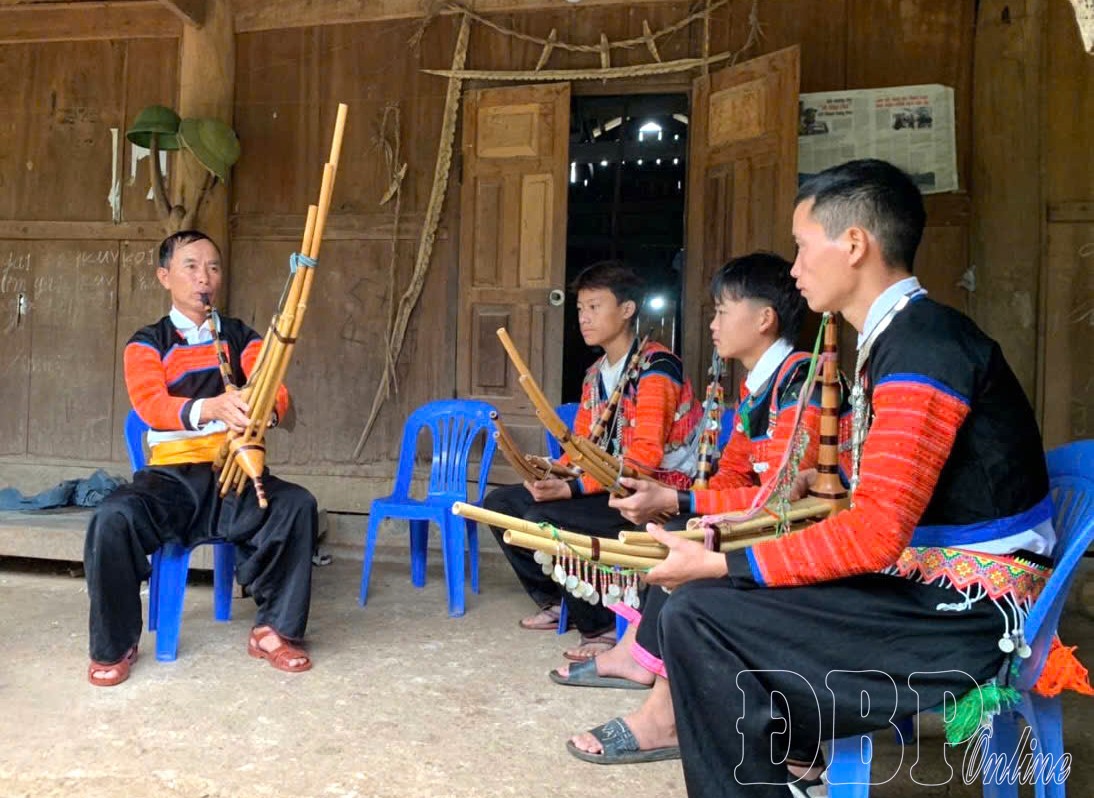
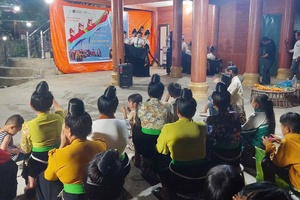
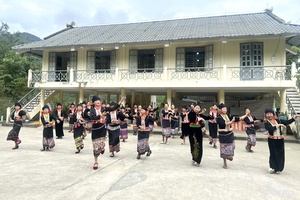
As the afternoon sun softens, the yard of Huổi Lanh village cultural house again rings with music and laughter. After school hours and field work, dozens of Hmông ethnic teenagers and youth gather to attend the panpipe-blowing and dancing classes. The young men intently practice panpipe dancing to the rhythm, while the young women rehearse umbrella dancing to rustic and profound folk melodies.
Sùng Thị Cho, a member of the Huổi Lanh village cultural club, shared: “Previously, I only liked listening to youth music on social media and found our ethnic folk songs and traditional dances somewhat difficult to learn. But since the elder artisans explained the meaning of each song and dance, I have understood and felt that our Hmông culture is so beautiful and worthy of pride.”
The initial sessions getting acquainted with musical instruments and folk performance arts were by no means easy. The hardest part was taking deep breaths from the abdomen so the sounds of the panpipe and flute resonate roundly without running out of breath, or mastering the vocal modulations in each verse while matching rhythmic steps to be both supple and robust. Yet overcoming initial unfamiliarity, ethnic pride has become the greatest motivation keeping learners engaged.
Wiping sweat from his brow after a panpipe dancing session, Vừ A Của, a trainee in the panpipe class, enthusiastically shared: “The hardest part is breath control and matching foot rhythms; at times the whole body aches. But when the whole team successfully coordinates with the music and the panpipe blends with the dance, I feel overjoyed and proud. I hope to learn well to teach younger children later and record videos introducing Mường Toong folk arts to social media.”
Watching the younger generation intently practicing in the tranquil highland afternoon space, artisan Giàng A Cu could not conceal his joy: “Now, every afternoon the youth invite each other to the cultural house to practice playing the panpipe, learn folk songs, and rehearse traditional dances; I am very thrilled! Teaching them requires patience, from breathing and singing each line to every footstep. Seeing them practice passionately, I am happy that our ethnic cultural traits are being continued without fear of fading away.”
The revival of Hmông culture in Mường Toong commune stems not only from artisans’ self-driven efforts, but also from close companionship and guidance by local Party committees and authorities. Identifying culture as a solid spiritual foundation, Mường Toong commune has implemented practical approaches to reintegrate heritage into community life.
Lò Thị Hiền, Head of the Culture - Social Affairs Division of Mường Toong commune, said: Inviting artisans to directly teach folk songs, folk dances, and traditional musical instruments every afternoon at the cultural house not only helps youth master practical skills, but also ignites pride, transforming them into core elements spreading ethnic culture within the community.
Going beyond preservation, Mường Toong commune has gradually sought directions to promote the intangible cultural values of the Hmông ethnic people in connection with socio-economic development. Currently, the commune has 16 village art troupes attracting hundreds of youth and teenagers. Panpipe dances, umbrella dances, and rustic folk tunes are gradually becoming attractive experiential tourism products, helping draw tourists to the Điện Biên border area.
“The commune’s goal is to promote intangible cultural values so that those who preserve and transmit culture can earn additional income from the very heritage of their ethnic group. In the coming time, the commune will link the conservation of folk songs, folk dances, and traditional musical instruments with community tourism development. Thereby, this both generates livelihoods for residents and preserves identity for future generations,” emphasized Lò Thị Hiền.
Leaving Mường Toong as the day’s last sunlight faded behind the mountain ranges, the sounds of the Hmông panpipe and folk songs still echoed with attachment. The image of elderly artisans diligently guiding and passing down each panpipe rhythm and dance movement to the younger generation leaves a profound impression. The Hmông cultural stream here has truly been unlocked, flowing endlessly and helping enrich the multifaceted tapestry of Điện Biên province.
Quỳnh Hoa






You have 500/500 characters left
Please enter 5 or more characters!!!